

No other city in the world has so many wave-splattered ocean pools as surfside Sydney in Australia…
In this interview, I spoke to Illawarra-based coastal architect, Nicole Larkin, whose work examines the relationship between architecture, landscape and the changing coastline of New South Wales. Nicole was trained at the University of Sydney and has worked across architecture, urban planning, coastal strategy and public art. She has a keen interest in how design strategies can be adaptive, affordable and useful for communities as they interact with their own natural backyards.
As creator of The Wild Edge research project, Nicole has studied and explored the many different ocean and harbour pools of New South Wales. She has documented these unique tidal sanctuaries to highlight their architectural, cultural and environmental significance. At the same time, she has been an advocate for their protection and revival, recognising their importance as vital public assets. Her work reminds us of the ongoing need for coastal conservation and community advocacy as our pools face increasing environmental strains.
During our chat, we talked about the origins of Sydney’s abundant ocean pools and how they might survive against rising seas and more violent storm surges.
Every ocean pool seems unique in shape and size, from the triangular Fairy Bower to half-curved Bronte Baths – what factors dictate how these structures take form and reveal their natural characters?
NICOLE: ‘Most of the ocean pools we have in New South Wales have been here a long time. We don't have a huge amount of great research on this, which is a shame, but I suspect a lot of them are potentially former fish traps.’
‘We have a couple that we know were definitely used by First Nations people originally, like The Entrance Ocean Baths and McIver’s Ladies Baths. We don’t have a great deal of research on others. I suspect some of them have much longer histories than we are aware of. Then others are post-colonial structures.’
‘Also, some of the ocean pools were naturally formed on the rock platform. In New South Wales, the formation of our coastline has resulted in broad, flat rock platforms on many of the headlands. It’s different in Queensland where you have these long, continuous beaches of sand. Whereas here you have embayments between the headlands. Some pools simply formed due to the coastal geology - their arrival was more opportunistic. Then these naturally formed pools were just made larger over time.’
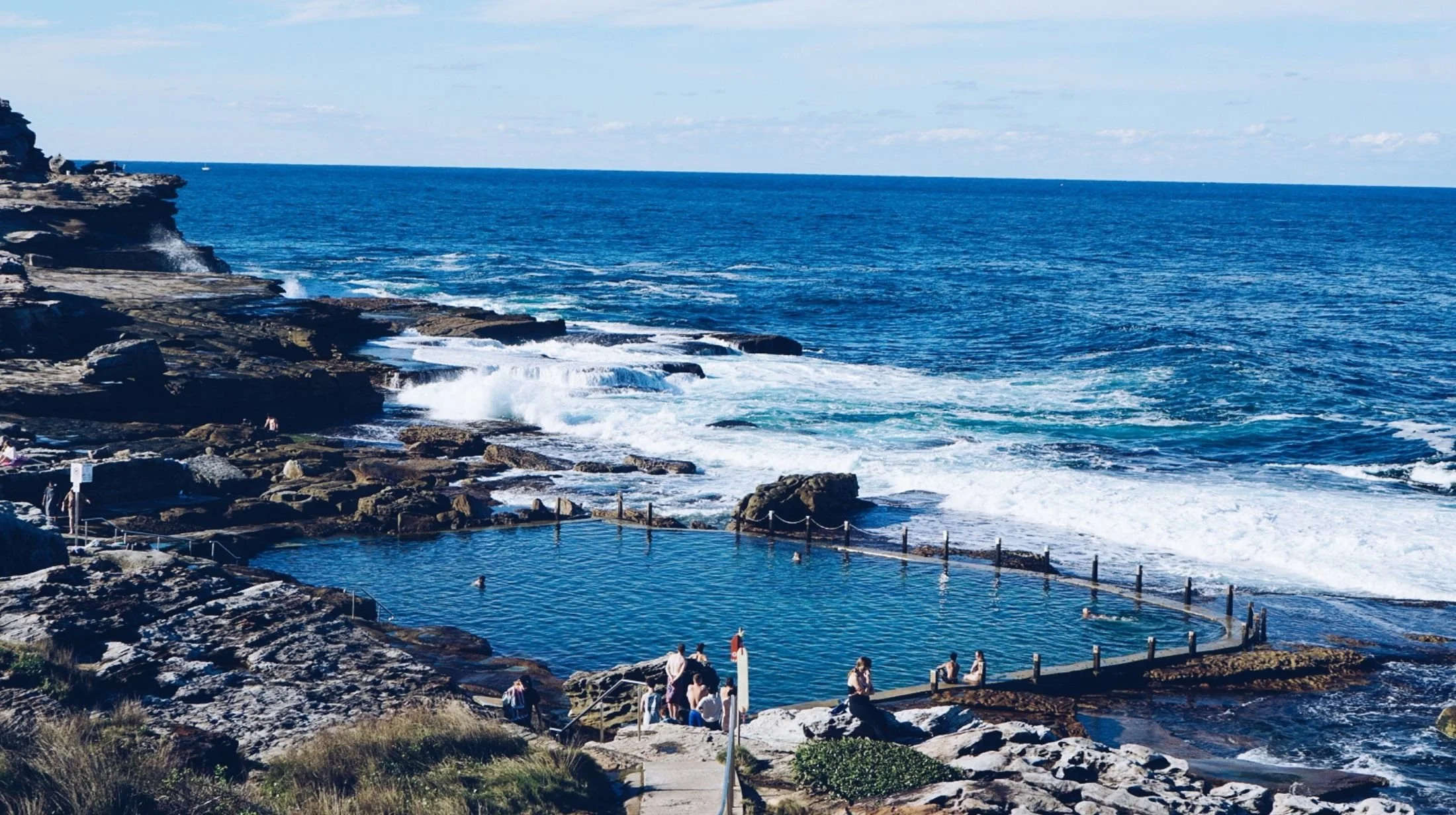
Mahon Rock Pool, north of Maroubra Beach
‘Of course, others are more formalised and rectilinear - 50 metres in length, with concrete that comes out of the rock platform. You start to see patterns in how they formed and where they are located. Sometimes you see pools that take advantage of the northern sunlight, or others tucked in behind the headland, protected from big swell and winds. Interestingly, you can tell when there's been various iterations of the same pool. You might notice a kid's pool next to it and then a ghost pool nearby.’
‘That's certainly the case for quite a few pools in the Illawarra. Usually they've tried to locate the pool in one spot and maybe it's filled with sand too much and it hasn't worked. Then they've progressed to another location nearby to see if that works better.’
“In New South Wales, the formation of our coastline has resulted in broad, flat rock platforms on many of the headlands...”
And a ‘ghost pool’ - is that the original pool?
NICOLE: ‘Yeah, like a pool that's no longer in use. So we've got a few pools around here like that in the Illawarra. There's some up north as well. Usually they were cut into the rock. While a lot of the pools today are enclosed by concrete walls and lifted up off the rock platform. That's so they can fill on the high tide and then at low tide the water peels away and you've still got the water held in that pool.’
‘Many of the ghost pools you find were cut directly into the rock, sitting much lower and closer to the surf. They're more exposed and harder to swim in. Now, you can't really see them except for at really low tides.’
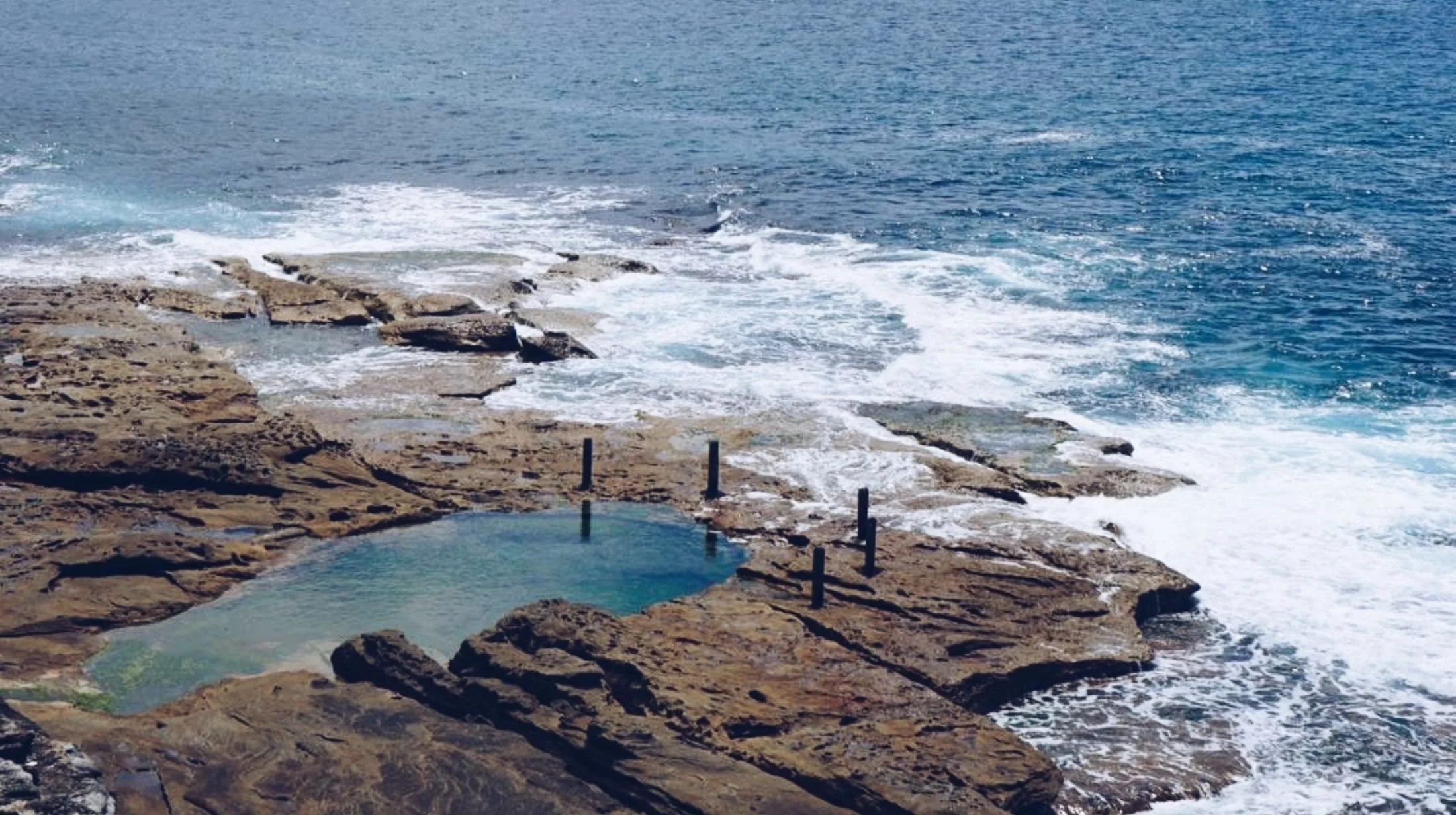
Ivo Rowe Rockpool - one of Sydney’s smallest ocean pools
‘On Sydney’s eastern coast there are a lot of natural rock pools left in the sandstone, where depressions were filled. In the Illawarra, we have a history of coal mining and miners used to bring dynamite and blast out pools in the platform. Then the sandstone is suited to shaping tidal pools and strong enough to hold together - though it does erode over time.’
Ocean pools are found in Australia in uniquely high numbers, especially Sydney (roughly one-fifth of the world’s ocean pools as reported by Time Out), what do you think it is about life on this continent that made these structures so appealing and enduring?
NICOLE: ‘Sydney has a really established history of why that is. There was obviously a transfer of culture of lidos and bathing that came across during colonisation. Folded into that, we also had a much more exposed coastline. So people were wanting to go into the water, but they needed that protection from rips and currents and sharks. There was a lot of people wanting to bathe, but when they started bathing, there was gender segregation. Many would swim in the nude and there would be separation between men and women - there’s still some of that legacy in places like McIver’s Ladies Baths, which is the only remaining spot for women only in Australia.’
‘I guess the pools were born of this wanting to go in the water, needing gender segregation and privacy, as well as safety and protection from rips and currents and sharks. We did also have the Municipal Baths Act of 1896 when councils were established in Sydney and there were land holdings on the city fringes. Councils needed a way to encourage new residents to move to their areas and buy land. So, some of them built ocean pools as a way to sort of attract new residents to the area.’
‘In the 1970s, there was actually a backlash against the ocean pools. A lot of our beaches - Bondi, Coogee, Clovelly - had terrible water quality and the beach wasn't this valued place that we see it as now. It certainly wasn't a clean ecological place. In fact, it’s only in the last 30 years that we've seen the water quality improve so drastically. A lot of our wastewater and stormwater goes far off the coast and the water quality has improved enough for us to reclaim our beaches and bathing spots.’
“...the pools were born of this wanting to go in the water, needing gender segregation and privacy, as well as safety and protection from rips and currents and sharks.”
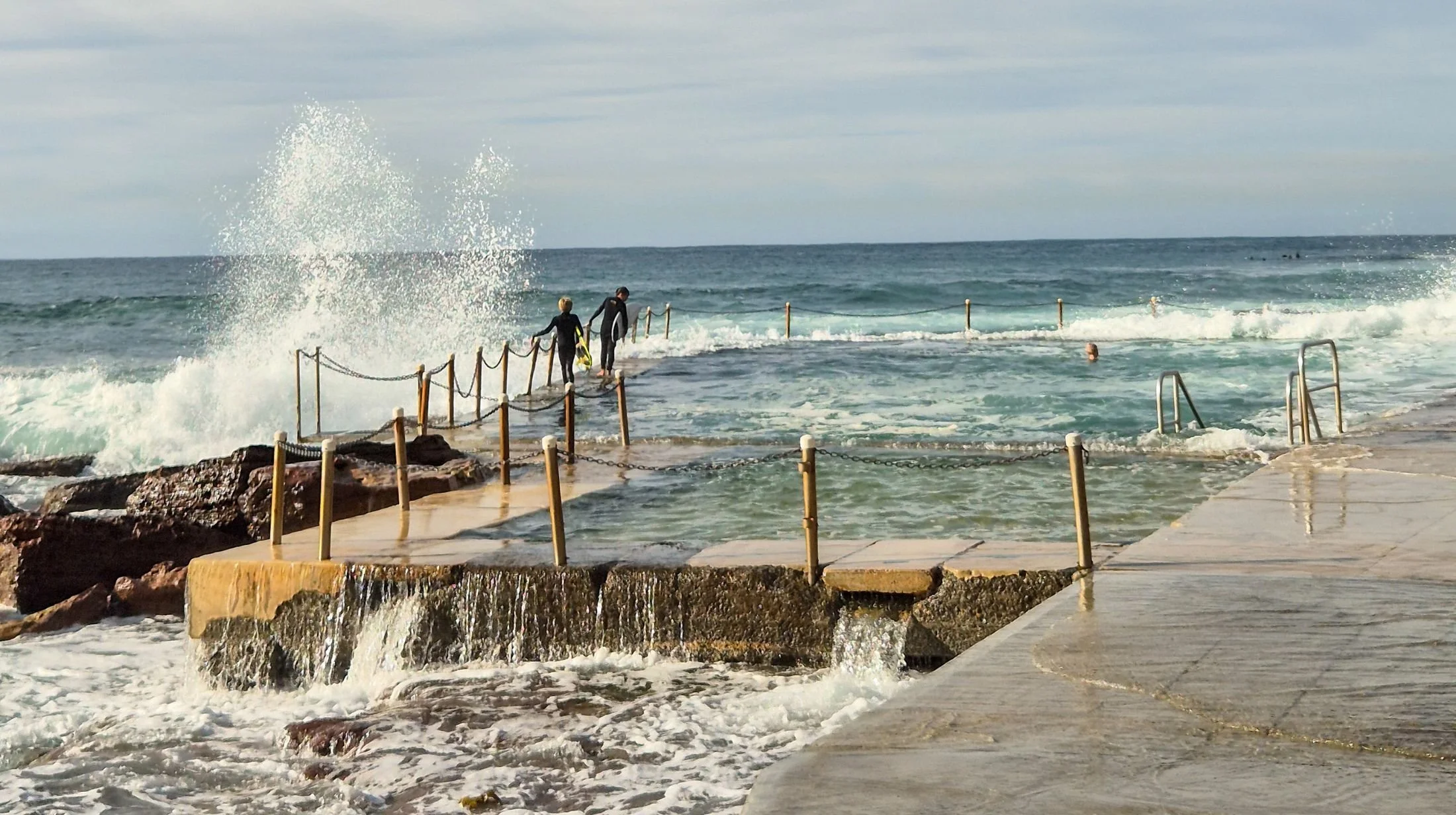
Avalon Rock Pool at the southern end of Avalon Beach
Your project ‘The Wild Edge’ describes these pools as sitting on the threshold between an ordered human-made setting and the unpredictable natural coastline. How important do you think these places are for broadening what we know about the ocean and wildlife around us?
NICOLE: ‘As an architect and urban designer, I'm really interested in broader planning and design issues to do with the coast. Ocean pools have been such a great vehicle to talk to people about that because they bring everything down to a common level. What I mean by that is I think sea level rise is going to be one of the biggest challenges that we have in New South Wales as we move forward. We have a lot of complex planning law that deals with that and grappling with it.’
‘Any day of the week, you can go down to an ocean pool and engage in a conversation with someone swimming there. You can talk about those really complex topics in a relatable way. So, I feel like ocean pools are fantastic places for us to have those discussions about how we as a community manage our coast, how we get to enjoy it, how we share it. It's really important that it stays in an equitable space.’
‘I have a young daughter and ocean pools are these fantastic points of access on the coast. In New South Wales, the beach is a really important public space to everyone. For little kids, or people who are not confident or less able, the coast is an inaccessible place to get to. While ocean pools are key pieces of infrastructure that help us get down to the water and access it sort of in a sheltered, protected and fairly independent way.’
‘For example, if you are someone who has a vision impairment but you love swimming, the ocean pool is the place where you can come and do that. Whereas an open beach is fairly daunting and it's not a place you could access independently at all hours of the day. I think it's an important point that ocean pools are integral to how we relate to and use the coast, but also how we think about the coast into the future as well.’
“I think sea level rise is going to be one of the biggest challenges that we have in New South Wales as we move forward...”
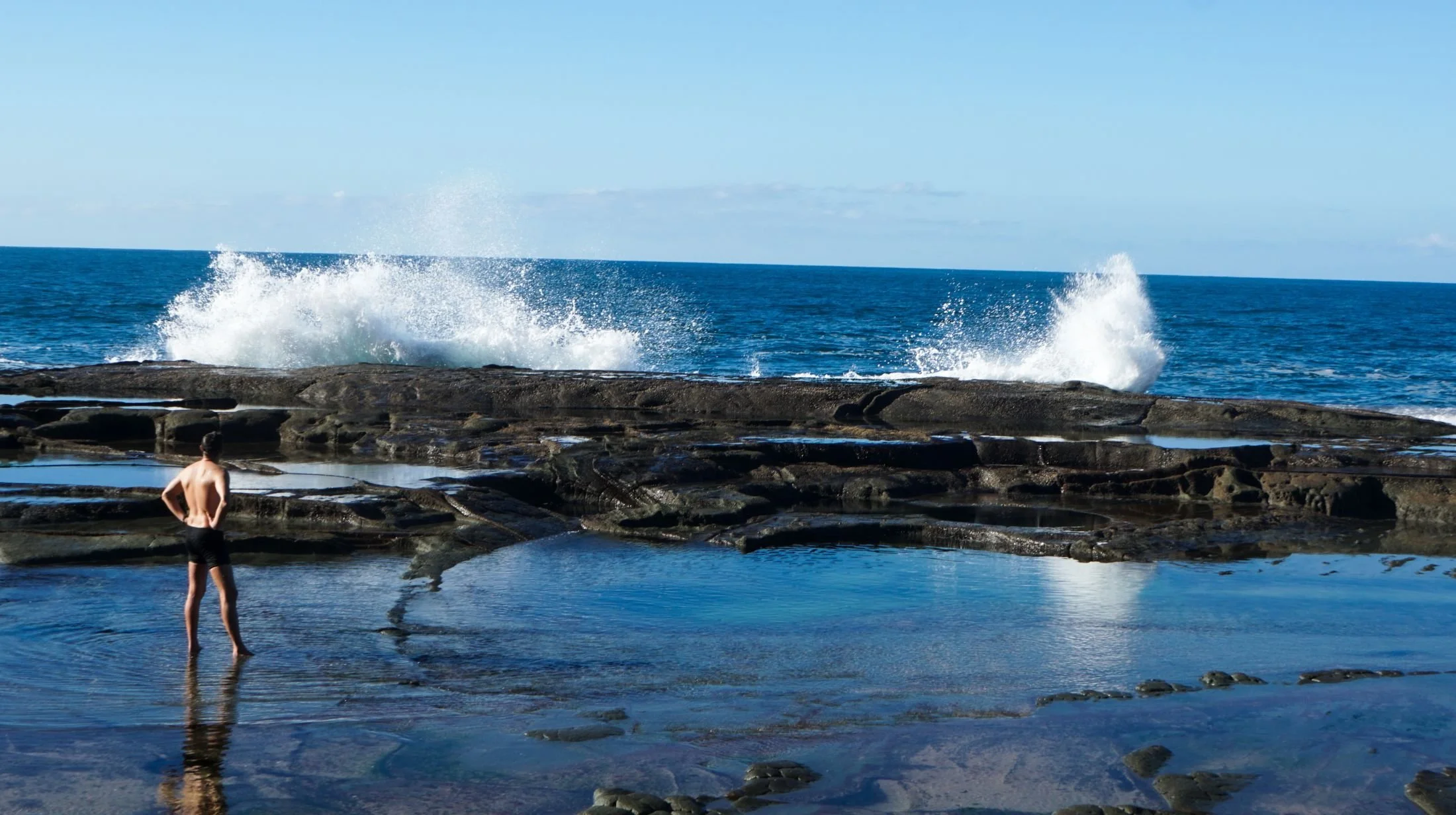
Standing at the Figure Eight Pools in Sydney's Royal National Park
You have written about the growing threat posed by climate change and rising sea levels – these pools are likely to sustain increasing damage in years to come. What do you think is the key to their survival? And are there any pools you are especially concerned about, which need major renovations?
NICOLE: ‘Ocean pools are really interesting because I think about them as like a landscape that is built to perform. What I mean by that is, they are made to go underwater. They're designed to deal with big storms. A lot of our ocean pools have been sitting there for over 100 years and they are structures that need maintenance every 20 years and some significant upgrades.’
“Ocean pools are really interesting because I think about them as like a landscape that is built to perform. What I mean by that is, they are made to go underwater...”
‘During a big storm you have a period of downtime when the pool needs to be cleaned and restored, and then they go back into use. I've been thinking more recently about how not many of our other open public spaces are built to perform in that way. They're not made to deal with significant storms or floods or fires and then bounce back.’
‘In my world of design and planning, we're often continually trying to remove assets from hazards, which totally makes sense, but in an age where we're dealing with climate change and adapting to that, we might better think of it as how do we make sure that this asset can weather the storm and then continue to serve the community.’
‘I think our ocean pools are super vulnerable to sea level rise, but also they're interesting case studies in how do we adapt to that and how do we continue to use the coast rather than just completely retreat from it. The reality of life in New South Wales is that we thrive and all live on the coastline and we need to sort of find a way to continue to do that.’
“...we might better think of it as how do we make sure that this asset can weather the storm and then continue to serve the community.”
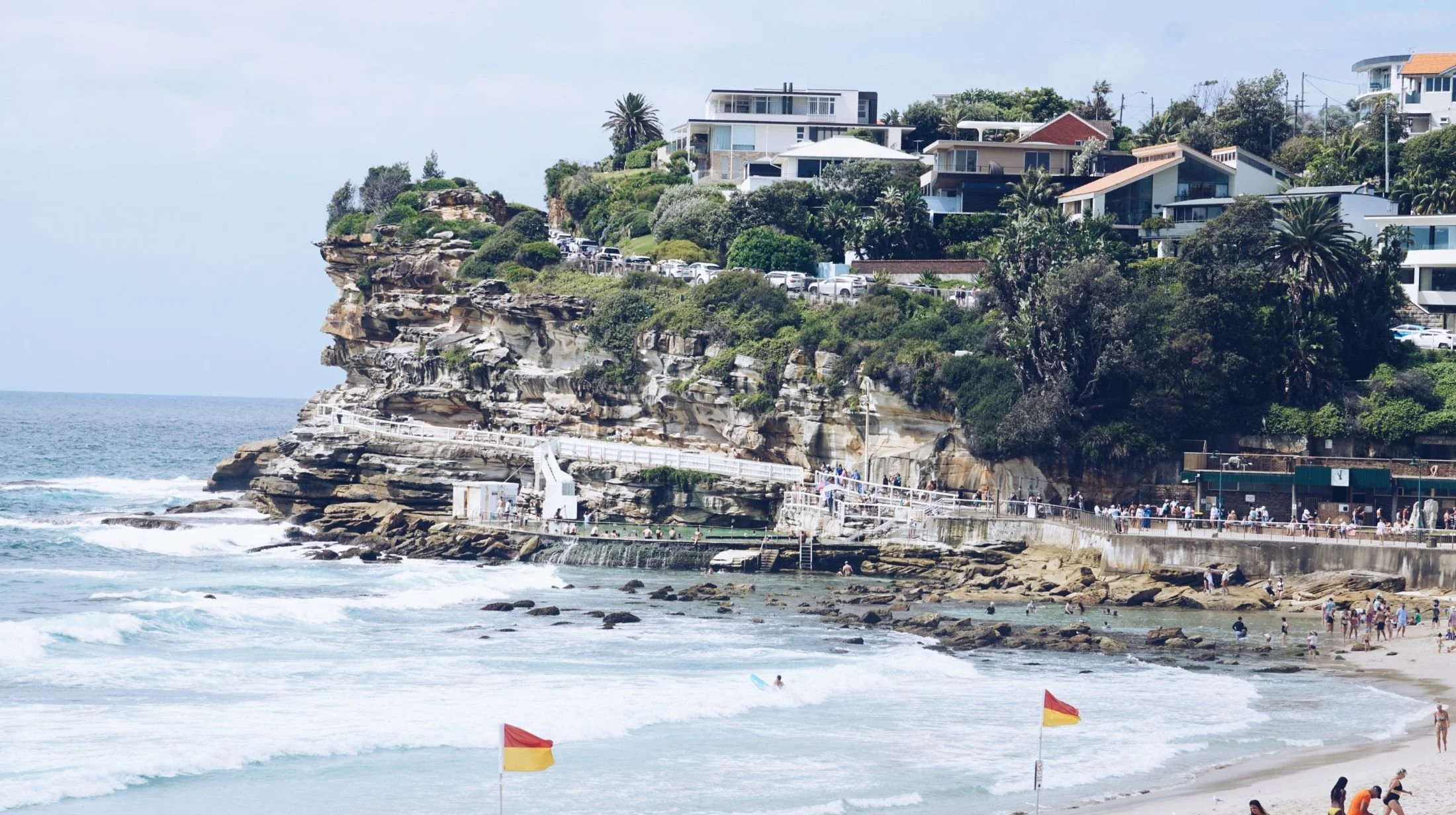
Bronte Baths - alive and well after the 2016 East Coast Low superstorm
I love the idea of these pools being designed to go underwater – I've never actually thought of that before.
NICOLE: ‘It's pretty unusual. You wouldn't see many things being designed for that today. It's a difficult thing no doubt about it – to engineer a structure that can deal with an East Coast Low is incredibly challenging.’
“‘…to engineer a structure that can deal with an East Coast Low is incredibly challenging.’”
‘It doesn't always work. Bronte Baths was closed for quite a long time after the 2016 storm and had a lot of work done to it. All of the pools are very vulnerable to rising sea levels because it's quite a delicate relationship between the bottom of the pool level and the top of the pool wall. It's all to do with how they drain and how they flush.’
‘You know, it can really affect the water quality and how intensively councils have to maintain the pool. So, all of these pools are definitely at risk, but it's something that can also be managed. I wouldn't say we should abandon being on the coast for that reason.’
Do you have a favourite ocean pool of all the ones you’ve visited in your travels along the New South Wales coastline?
NICOLE: ‘That's the classic question, I think. About four years ago my husband and I moved down to Austinmer – we were living in the Glebe before that. I think the twin [Austinmer Rock Pools] are probably my favourite now just because I spend a lot of time there.
‘Every second day I usually go down. I went down this morning, but it's pretty big surf so it wasn't very nice.’
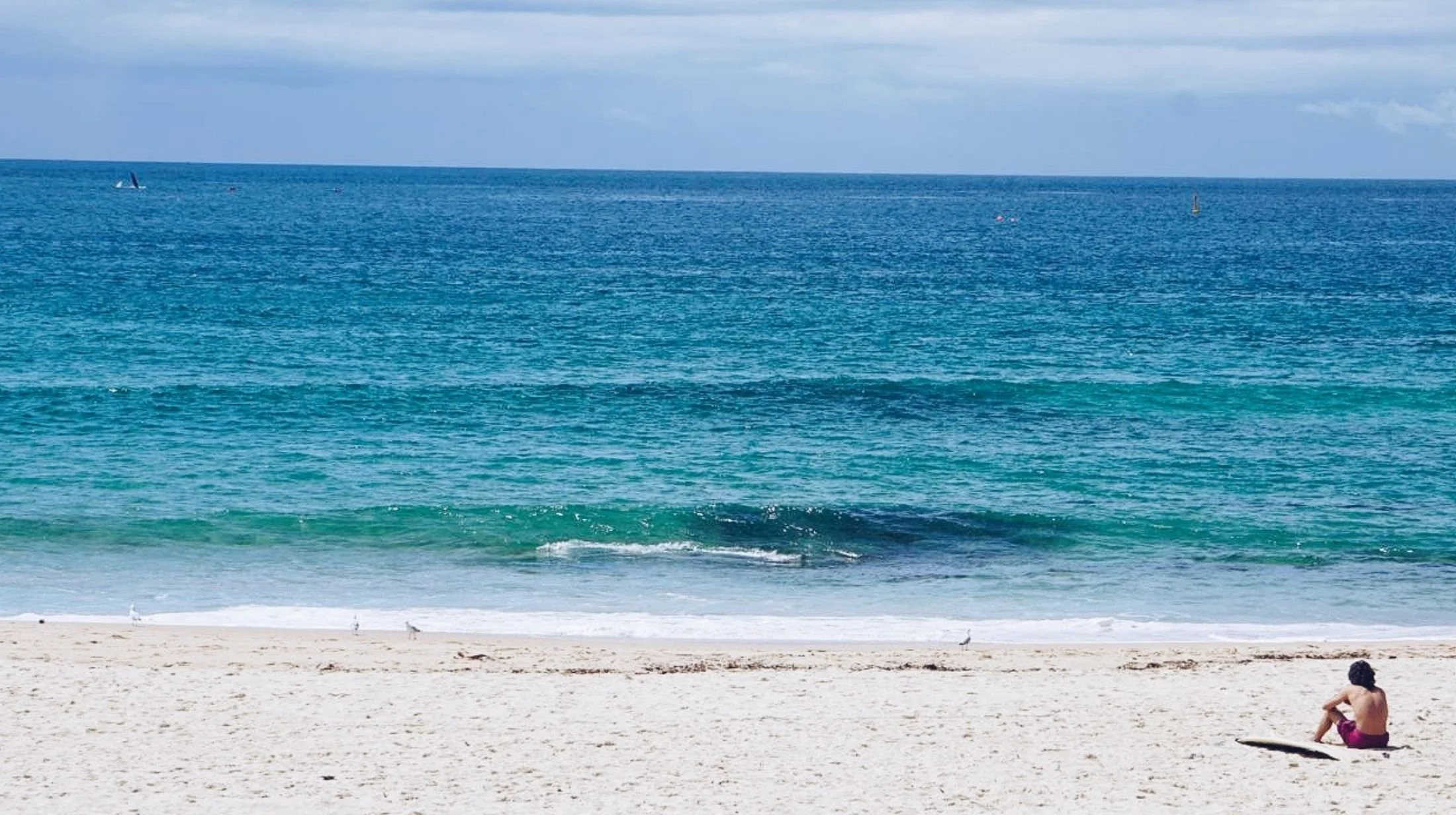
Sydney surfer stops and sits to watch a passing humpback whale
Learn more about Nicole Larkin’s project ‘The Wild Edge’ and let us know if you have questions in the comments section below…
