

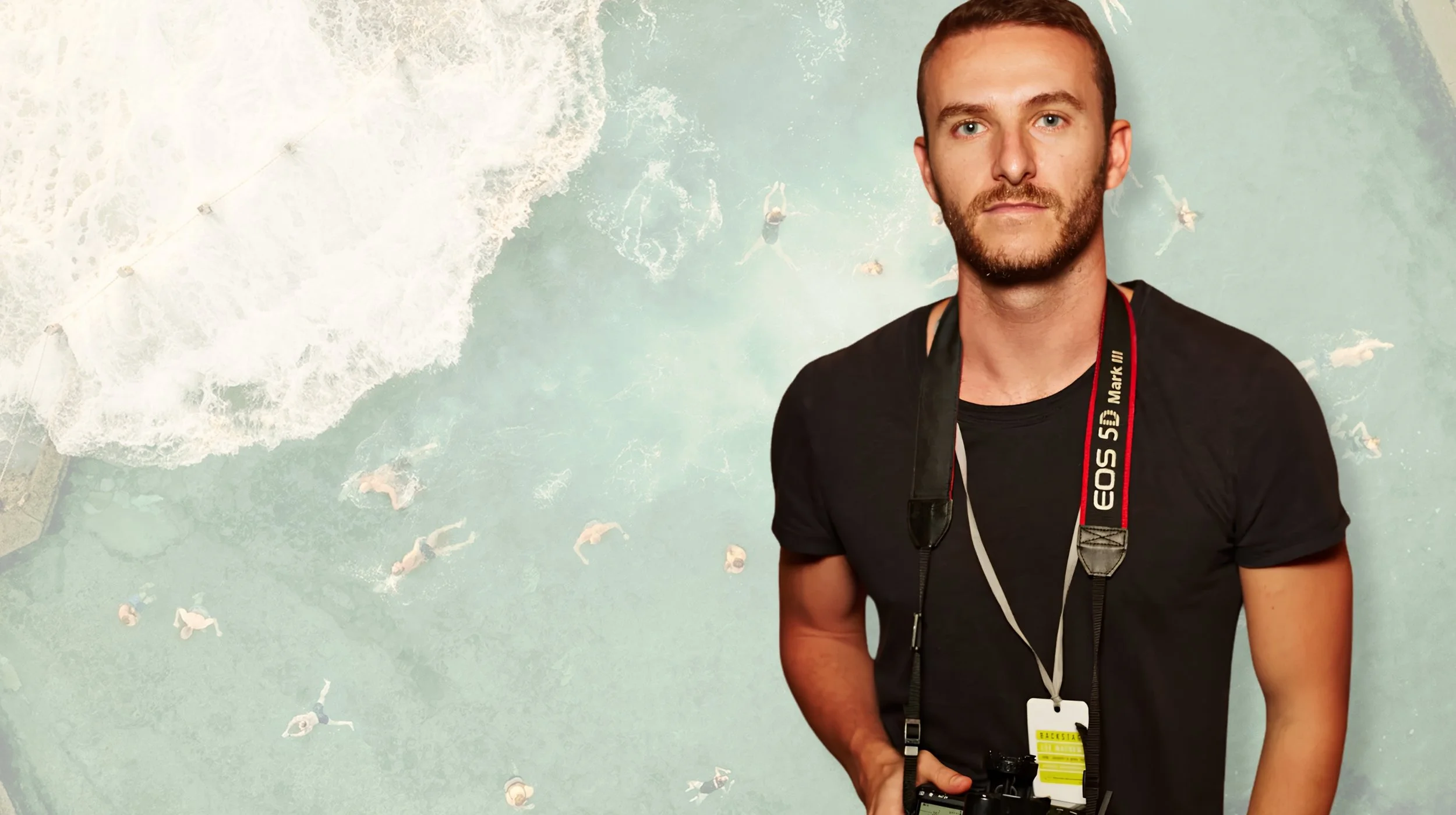
Ever stopped mid-doomscroll to gawp at one of Sydney’s ocean pools? Chances are the shot was taken by French-born Vincent Rommelaere…
Vincent first arrived in Sydney back in 2005 and quickly fell for the city’s coastline. Here he discovered an enviable collection of ocean pools, carved into sandstone shelves - treasures entangled with Australia’s coastal heritage and settings to view the rituals of an unstoppable seagoing community.
For two decades, Vincent has honed his skills as a photographer and filmmaker, working with the likes of Qantas, Tourism Australia and Netflix, alongside running a fine-art print store: Australia Unseen. He has made it his mission to explore and photograph the pools of this country, one early morning trip at a time. No AI, no stock, no studio setups. Just himself, a camera, drone, and countless tubes of high-SPF sunscreen.
Vincent has also published two fantastic coffee table books, showcasing his catalogue of Australian landscape and coastal photography. The first (published in 2021), Rock Pools Sydney, takes you on a visual journey through Sydney’s ocean pools, from Palm Beach to Cronulla. The second (published in 2023), One Hundred Beaches Sydney, reveals some of the world’s most famous beaches like you’ve never seen them before, accompanied by words from travel journalist Amanda Woods.
I caught up with Vincent to discuss his fascination with Sydney’s surfside pools, the communities that gather around them, and his favourite places to swim and photograph. We also briefly discussed the importance of preserving these pools for future generations. As sea levels rise and storms surge with increasing force, these much-loved spaces are under threat. Documenting their stories and local significance has never been more important than it is right now.
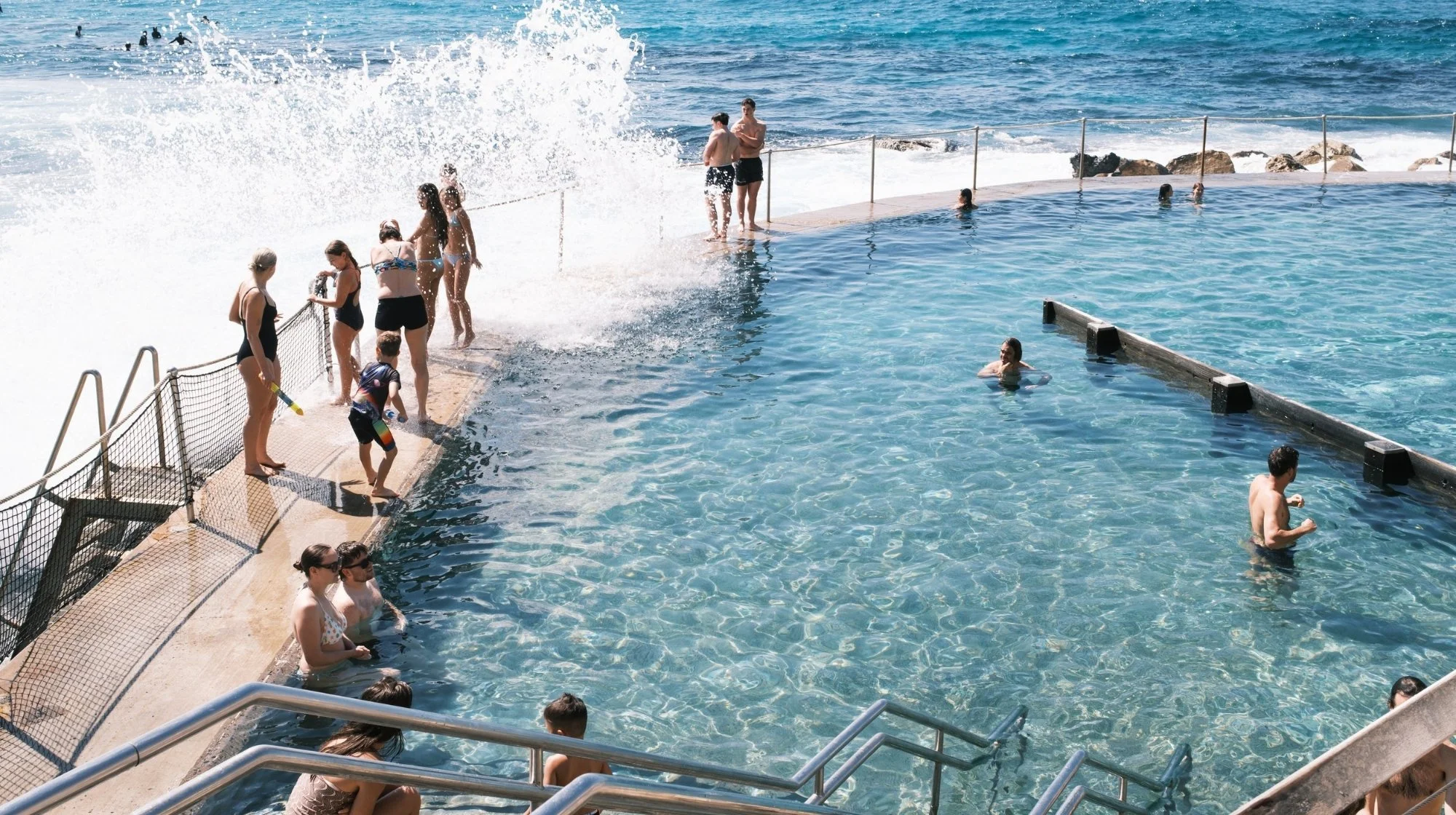
Bronte Baths – Vincent’s favourite pool to swim (Photo by Vincent Rommelaere)
You have been in Australia over two decades now and photographed so many of Sydney’s lesser-known ocean pools. What was it about this city’s coastline and its carved tidal waters that captured your interest and imagination?
VINCENT: ‘I first landed in Sydney in 2005 as a backpacker on a working holiday visa, and I fell for the place straight away: the city, the lifestyle, the coast. Rock pools have always been one of my favourite things to shoot. They’re such an Australian thing, and NSW has well over a hundred of them. I think a lot of Australians don’t realise how special they are, because they’ve grown up around them. Coming from overseas, when I wanted to do a book about Sydney, this was the obvious visual story. What really hooked me was seeing them from above with the drone. They turn into these beautiful shapes carved into the rock, with the water, sand and salt making patterns you never notice from the beach.’
I really enjoyed yours and Amanda Woods’ article about the seagoing ‘Buckettes’ of Mona Vale. Have you met many other different local clubs and swimmers on your travels, while working on Rock Pools Sydney? Any unexpected characters along the way?
VINCENT: ‘To be honest, not many. I don’t have one pool I go to regularly, so I haven’t really got to know the groups the way the locals do. But you can tell every pool has its regulars. You get everyone from former Olympians to 80-year-olds who are in there every morning, right through winter.’
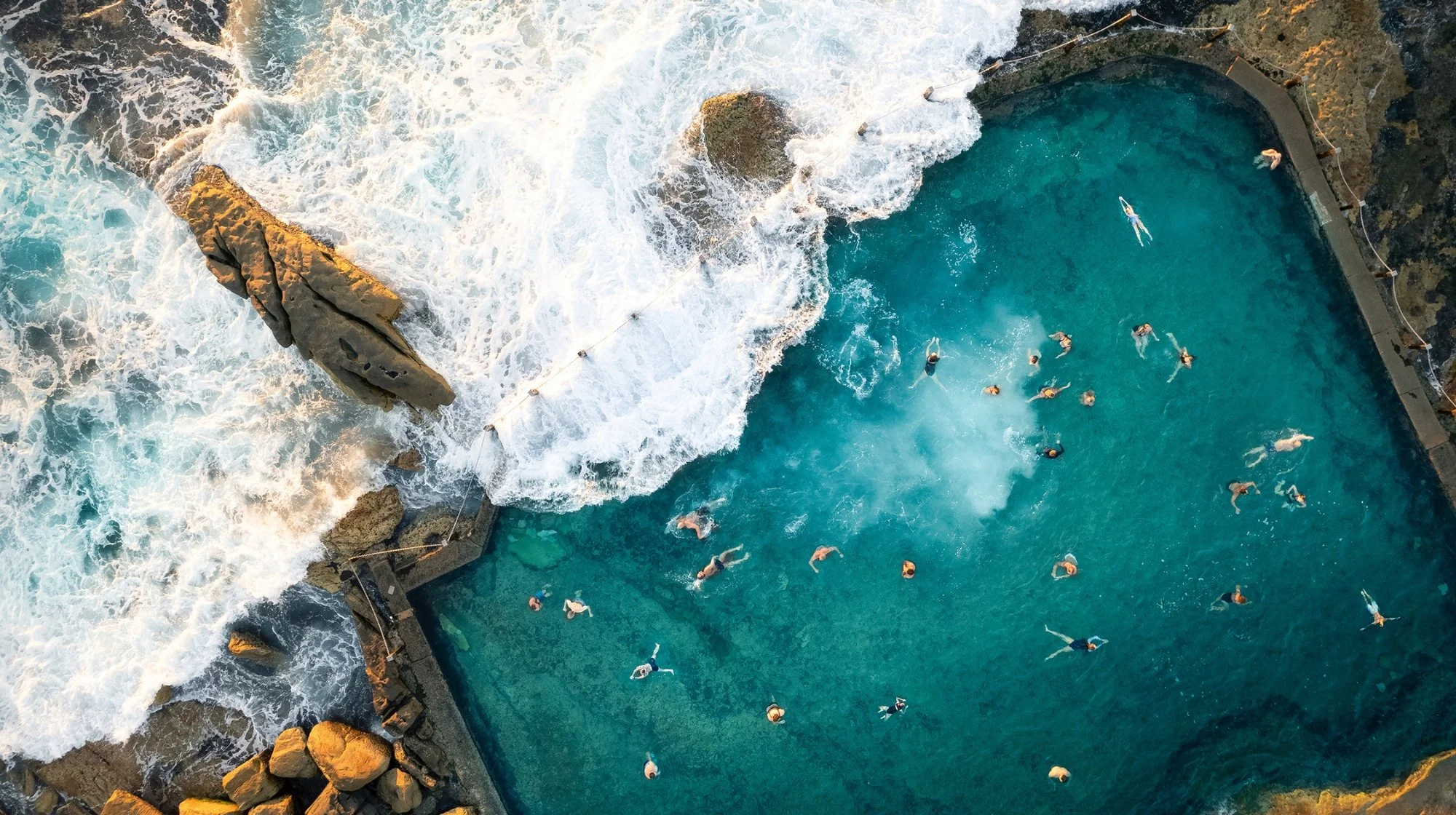
Mahon Pool – Vincent’s favourite pool to photograph (Photo by Vincent Rommelaere)
Do you have a favourite ocean pool to visit and photograph?
VINCENT: ‘Bronte Baths is the one I love swimming in. To photograph, it’s Mahon Pool. It’s a big open space, and it looks stunning at sunrise and from the air.’
You’ve said ‘ocean pools are for everyone’. Why do you think Sydney’s ocean pools have been such enduring spaces for the community here? And, have you seen any signs of their fragility over the years?
VINCENT: ‘For a lot of people, the rock pool is a daily routine. The British go to the pub, the French drink coffee on the terrace, and Australians surf or swim in their rock pools. It sounds like a cliché, but it’s not far from the truth. A lot of them were built generations ago by locals who just wanted somewhere safe to swim, and they’ve been quietly holding communities together ever since. Most of them are also free which is great. They’re always changing though. With rising seas and bigger storms, some of them won’t survive in the form we know them.’
Your recent work includes photography of 25 Illawarra rock pools from Bulgo Beach to Gerringong for the National Library of Australia. Now, sea levels are rising, storm surges are chewing on the coastline and many pools face structural deterioration. How important do you think it is to document and preserve these treasures for future generations?
VINCENT: ‘Really important. Some of these pools might not be around for the next generation, which is why having them in the National Library matters. And as someone who came here as an immigrant, being able to add a little something to Australian history means a lot to me.’
“The British go to the pub, the French drink coffee on the terrace, and Australians surf or swim in their rock pools.”
You can find a full collection of ocean-inspired books and photography on Vincent’s website…
