

‘All of us, I believe, carry about in our heads places and landscapes we shall never forget because we have experienced such intensity of life there...’ - Roger Deakin (‘Notes From Walnut Tree Farm’)
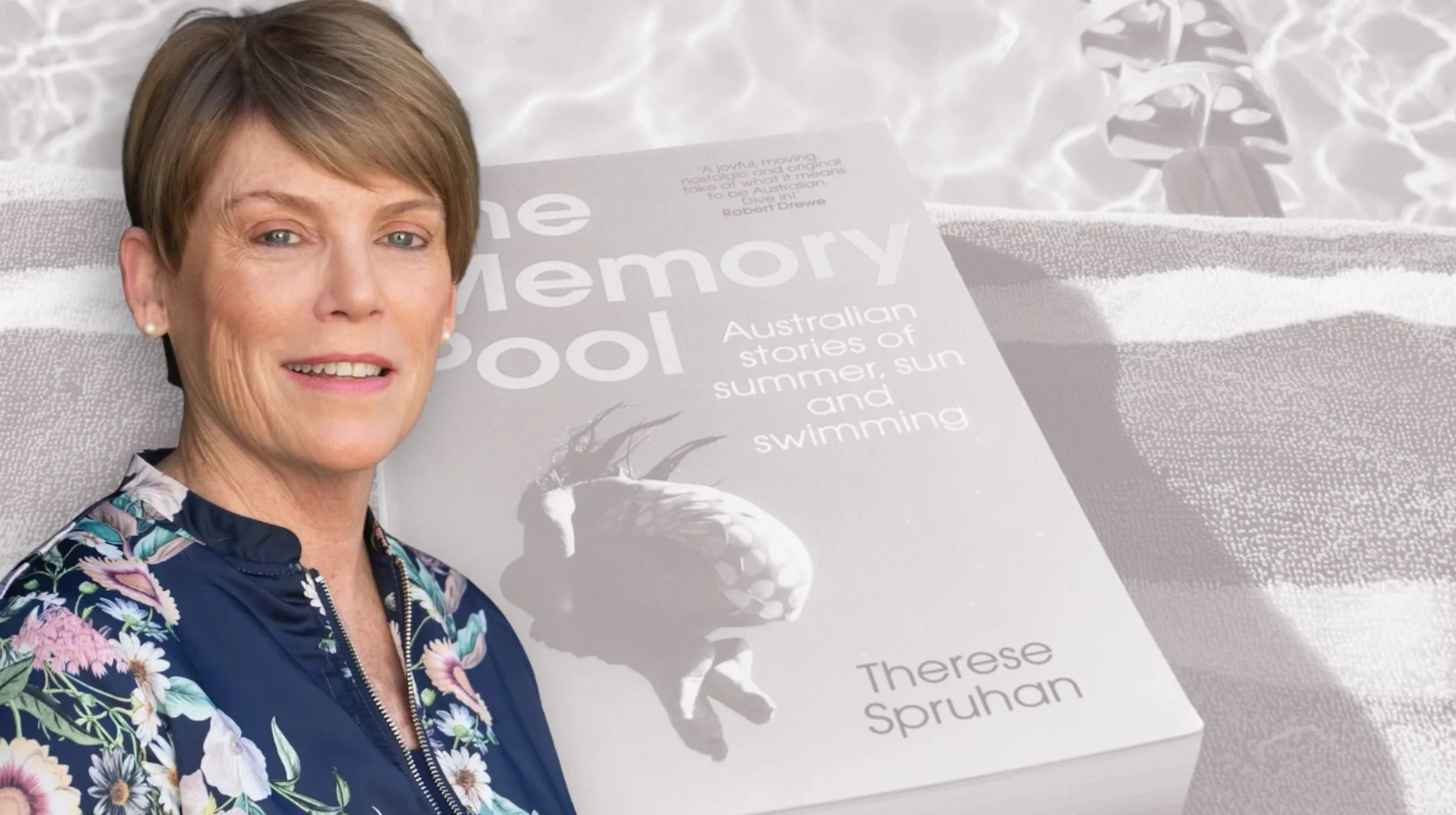
This week, I spoke to Sydney-based author and photographer Therese Spruhan - someone who has documented the halcyon days of Australian pool culture, sharing the childhood stories of 28 different Australians in her book: ‘The Memory Pool: Australian Stories of Summer, Sun and Swimming’. Contributors include well-known names like Trent Dalton, Shane Gould and Leah Purcell, who reflect on pools as places of sanctuary, learning, and adventure.
For Therese, swimming is about more than just chasing black lines and bouncing from one end of a lane to the other. She reminds us how early immersions can hold lifelong significance, inviting us to revisit our local waters and dive back into our earliest memories of being submerged.
During research for my own book, I kept returning to Therese’s ‘Swimming Pool Stories’ - a fantastic blog filled with her sparkling visits to Sydney’s ocean pools, entangled with the pools’ histories, as well as meetings with the locals who keep them alive. Over the years, Therese has gained a deep appreciation for the characters who grow up along Sydney’s wave-carved coastline, from the winter swimmers of Mahon Pool to the ‘Jellybeans’ of Cronulla. She is also another avid chaser of tidal saltwater and a regular visitor to places like Wylie’s Baths, Giles Baths and Dawn Fraser Baths.
Below, we explore Therese’s earliest swimming memories, her family’s generations-long connection with the sea, and the magic of Sydney’s enduring ocean pools.
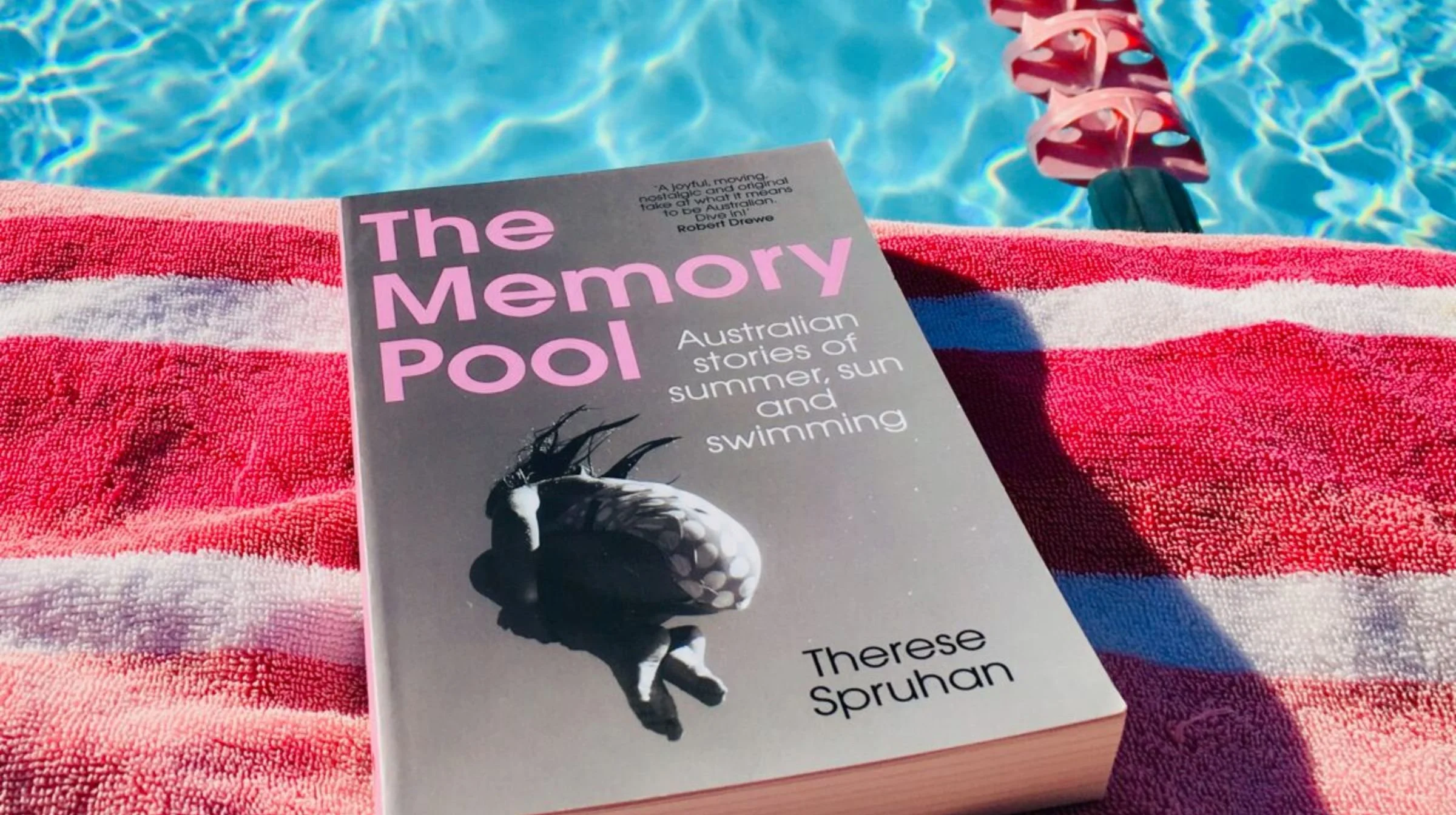
In ‘The Memory Pool’ you shared an anthology of swimmers’ childhood swims in local pools and tidal baths. What is your earliest memory of being in water?
THERESE: ‘My earliest memory of being in water is probably in our wading pool, which was a dark green canvas material that Dad used to erect in our backyard in summer when my siblings and I we were really little. The main thing I remember is that my sister and brother and I used to compete to hold the hose to fill the pool with water. My other earliest memory was at Northbridge Baths, a tidal pool in Sydney’s Middle Harbour which I write about in my book ‘The Memory Pool’. Here’s those words below…’
“It’s late 1964, and I am four. Mum has just applied pink zinc to my nose and shoulders on the grassed area at the baths where my family always sat when we were little. Then I am running towards the water in my stretchy pale pink one-piece, past my little brother Mark playing with his bucket and spade on the sand, and towards Dad in the olive-green water.”
”I climb on his back and he takes me out to the deeper part where the water turns a darker emerald. He pretends to be a crocodile about to eat me up and I giggle when he turns his head and opens his mouth as if he is about to take a bite. When we head back to the shallows my older sister Annette has a go on Dad’s back and then Mum joins us in the water, holding my hands and leading me along, encouraging me to blow bubbles and kick. Later, when Mum calls out that it’s time to leave, I duck under again so I will take home the feel of the water and smell of the salt on my skin.”

And why do you think so many of us feel such intensity of life in the pool?
THERESE: ‘When I was a kid I always felt like I’d returned to my natural state when I was in the water especially salt water, and I still do now. I love the feel of water, the release, the freedom, the physicality of swimming, and I always never want to get out.’
‘When I was interviewing the 27 Australians for my book, about a pool that was important to them as a child, so many described that feeling of intensity of life in the pool – whether that was actor Bryan Brown at the Bankstown Baths in western Sydney, Olympian Shane Gould training at the Forbes Carlile pool at Pymble on Sydney’s north shore or author Trent Dalton running down the grassy hill at Brisbane’s Sandgate Pool towards the water.’
‘I think this paragraph from Trent Dalton illustrates that intensity of life at the pool…’
“It was pretty simple that pool – a massive dugout filled with chlorinated water – but what made it magical was you could do so much within it. You could duck your head underwater and kiss a girl, you could scream things to your mate underwater and try and get him to translate. You could float on top of the water for hours and daydream or you could execute a backflip and find out how brave you were and see how many flips you could pull off. You could see how long you could stay underwater and how much endurance you had by the number of laps you could swim. You could discover so much in that one simple thing, the swimming pool...”
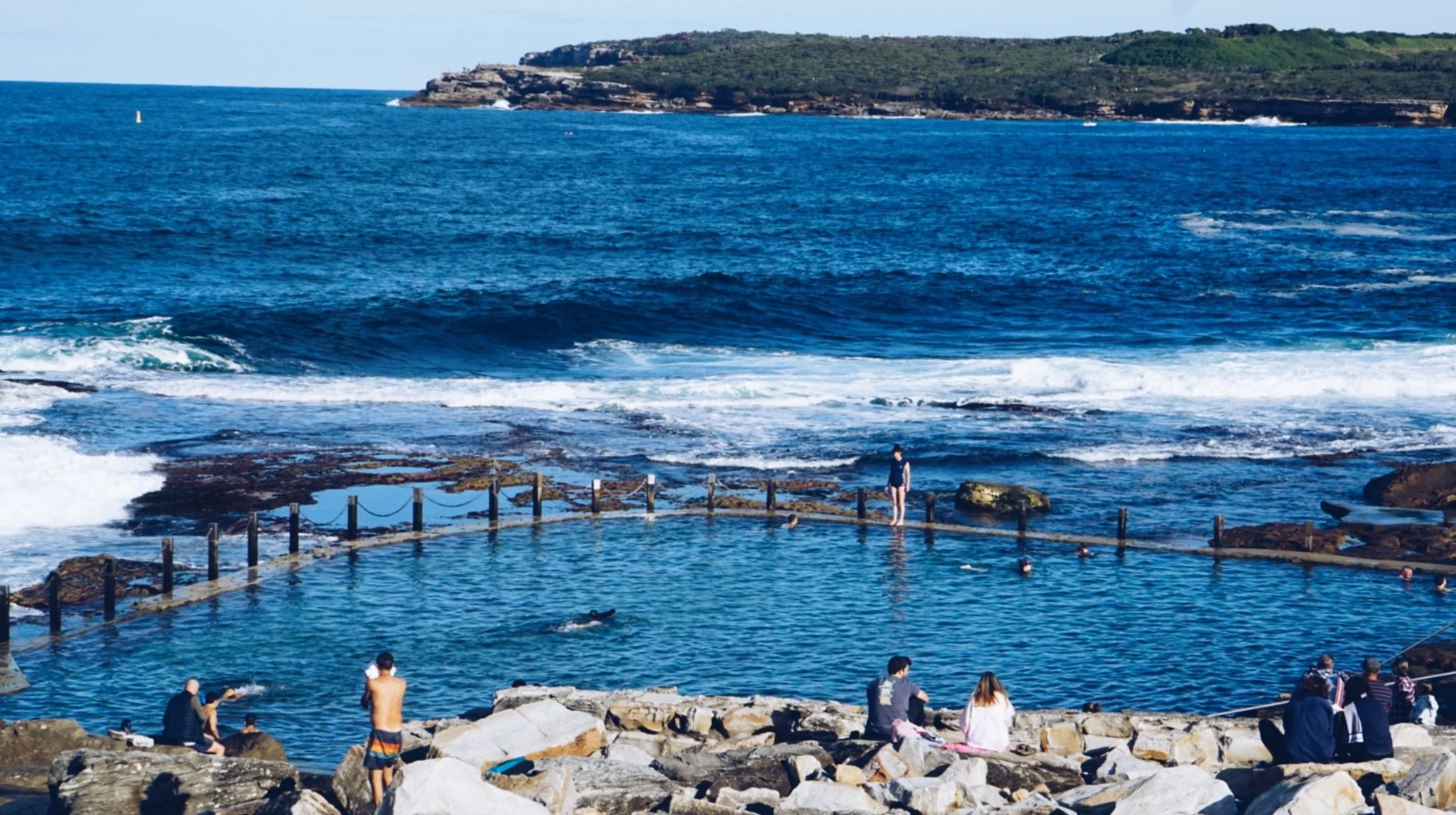
Mahon Pool - home of ‘The Maroubra Seals’
Have you encountered any particularly memorable characters in your time among Sydney’s seagoing clubs and communities?
THERESE: ‘Yes, for sure. They are everywhere up and down the coast, and you meet them at suburban and regional pools. A number of years ago I wrote a story for the travel section of ‘The Weekend Australian’ on some of Sydney’s ocean pools and in doing the research for that I met all sorts of characters – the guys who hang outside the men’s change rooms at Bronte sunning themselves all year round and chewing the fat, dipping in the ocean pool and the bogey hole. ‘The Maroubra Seals’ are blokes who have their own clubhouse above Mahon Pool and have a winter swimming club. Then there’s the Jellybeans at Oak Park Rock Pool in Cronulla that have been going for more than 40 years. Apparently they got their name from a guy walking above the pool who thought they looked like jellybeans with all their colourful caps. Just last weekend they had a beautiful memorial service in the pool for Carol, one of the original founders of the group, as well as a musical farewell from all the ukulele players among the Jellybeans. They are a very supportive swimming group and like a lot of people up and down the NSW coast they can’t imagine their lives without these ocean pools.’
To what extent do you feel the sea is entangled with the identities of Sydneysiders living along, and near the eastern coastline?
THERESE: ‘If you live close to the water – whether that’s the harbour which is where I grew up – or by the Pacific Ocean – it plays a huge part in Sydneysiders’ lives.’
‘For me, it’s where I developed a connection with salt water. I have lived in the inner west of Sydney for the past 35 years and love all my local chlorine pools, but often I get an urge to be in saltwater. So, I head over to Wylie’s or in summer to ‘Dawnies’ – Dawn Fraser Baths in Balmain – which I like at high tide as most harbour pools are at their best at high tide as there’s more flow, and of course, more water to swim in.’
‘I see my love of swimming and the sea as something that was passed down to me and my siblings from our mother. She grew up in Maroubra and spent a lot of her childhood at the beach and at Mahon Pool. She loved swimming and so when she had kids, very early on, she took us to Northbridge Baths, the tidal pool not far from our house. Her father had grown up at Bondi and was a big swimmer – so he passed it on to her. Everyone in my family swims regularly and we can’t be at a beach and not get in. Every summer holiday in the 1960s and 70s, our family spent two weeks on the north or south coast of NSW – swimming in the surf every day and making occasional visits to the local pools. It was bliss and it’s still my favourite type of holiday.’
‘But there’s a lot of Sydney that’s not that close to the coast and that’s where the local pool is really important.’
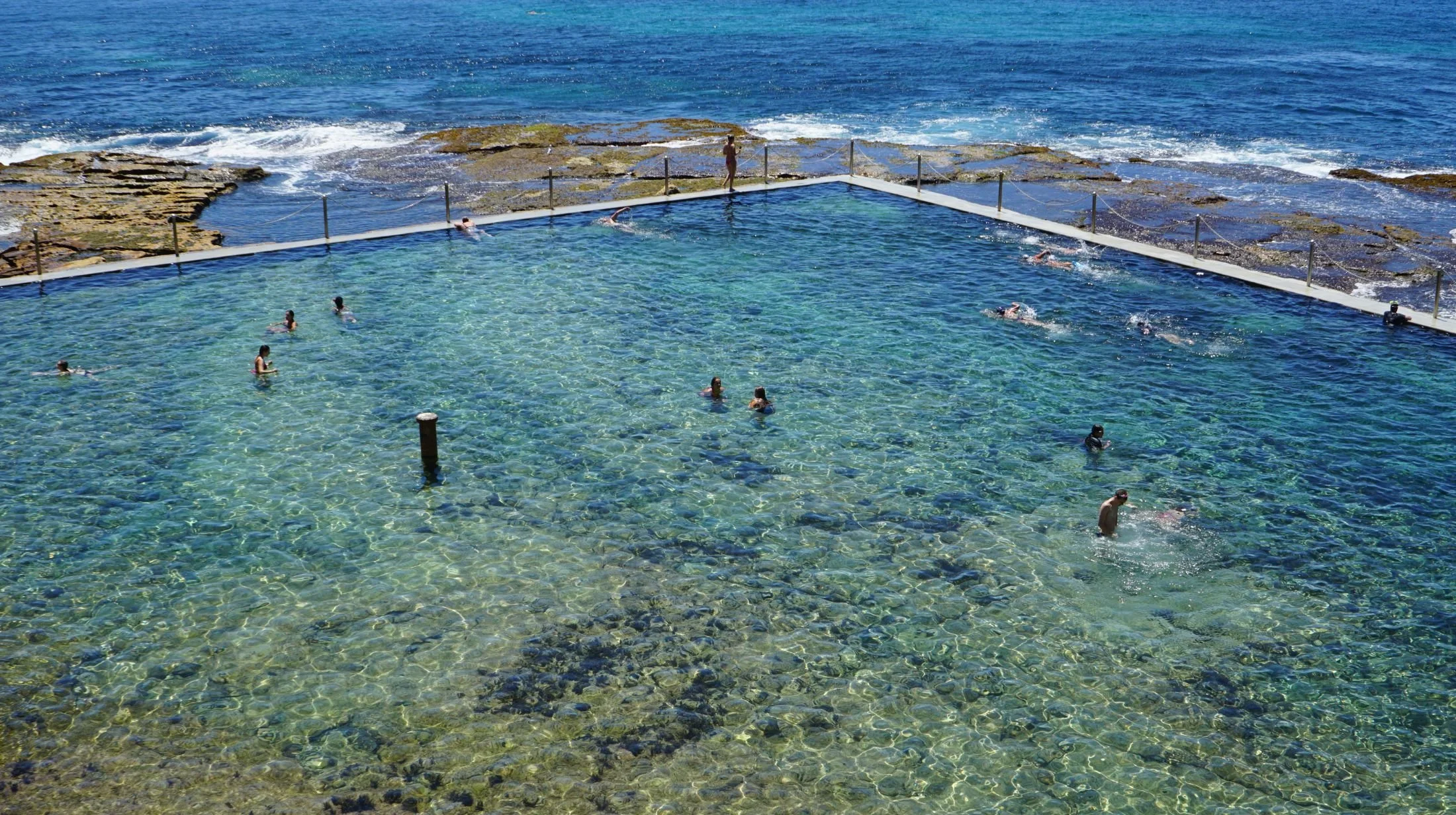
The broad, sunlit waters of Wylie’s Baths in Coogee
I read you were particularly fond of Wylie’s and Giles Baths (where you often spotted a blue groper). Do you have a favourite ocean pool in Sydney and how has your relationship with that place changed over the years?
THERESE: ‘Wylie’s Baths is definitely my favourite especially not in the peak of summer. I like it when it’s quieter and not so crowded. When you walk through that yellow and blue striped entrance it’s like stepping into another world – a more chilled, relaxed place and in the cooler months it’s not a big scene. One of the people I interviewed for ‘The Memory Pool’ – artist Lizzie Buckmaster Dove, described visiting the Blue Pool at Bermagui for the first time as like stepping through the wardrobe in Narnia into this lucid, liminal, watery world. Wylie’s is like that for me. I love hanging over the deck above and watching the water, all the activities in and around the pool and gazing out to the wide expanse of Pacific Ocean and Wedding Cake Island.’
‘I started going to Wylie’s more regularly in lock-down with my niece who is an intensive care nurse – it was just a beautiful thing to do with her – to meet there and swim and watch the marine life below. It was like a lovely time-out from all the difficulty in the world. Since those lock-down days, swimming at Wylie’s has become a reasonably regular thing I do mostly with an inner-west swimming friend. We swim our 20 laps and then have coffee on the deck after. We usually go every few weeks or so but not at the moment because it’s closed for repairs.’
‘Interestingly my mother learnt to swim at Wylie’s from Miss Wylie – who we presume is Mina Wylie – whose father built the pool and who came second to Fanny Durack in the 100 metres freestyle at the 1912 Stockholm Olympic Games – the first Olympics to include swimming events for women.’
‘One of my favourite experiences at Wylie’s is the annual winter solstice swim held around 22 June each year. There’s a wonderful atmosphere of camaraderie in the pool and it’s so beautiful watching the sun rising over the horizon, casting all sorts of colours – pink, purple, gold – in the water, and everyone getting up the courage to jump in despite the cold.’
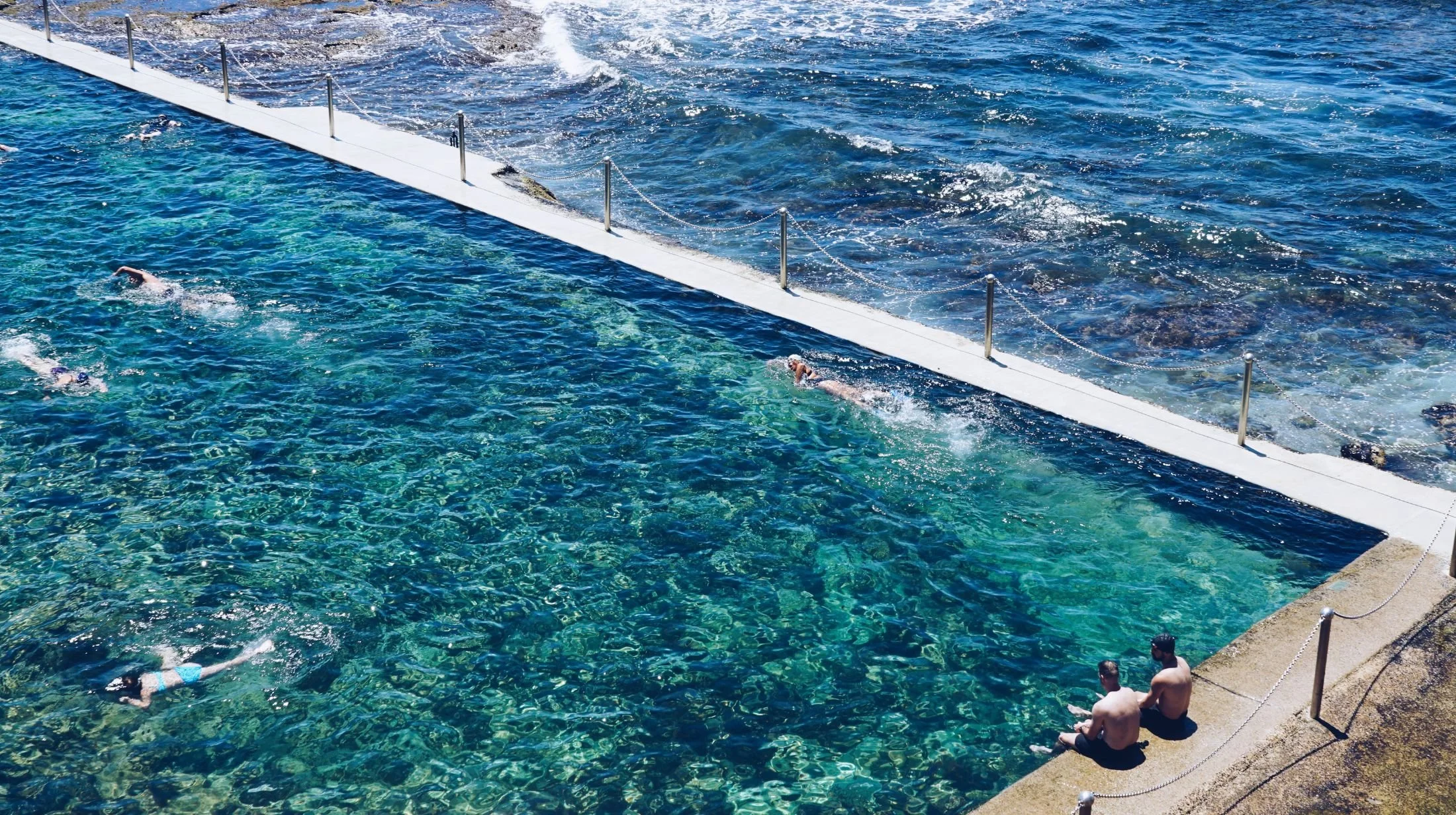
Swimmers set off from the seaward corner of Wylie’s Baths
‘I also love Giles Baths as like Wylie’s it has the natural bottom, so you are not looking down on concrete – you are looking at marine life and sometimes you might be lucky enough to swim with a blue groper or a cuttlefish. It can get pretty wild at Giles Baths in big seas and sometimes at high tide but it’s great to watch from a safe spot.’
‘I also really love McIver’s Ladies Baths. Every year when a good friend returns to Sydney from London where she has lived for the past more than 30 years, she and I and another two friends make an annual pilgrimage to the women’s pool. It’s become a tradition and it’s lovely to all plunge into the water together.’
Many of Sydney’s ocean pools have survived for generations. Yet they are always exposed to the Pacific – threats of erosion, surging storms and rising seas. Do you think there will ever come a time when locals stop swimming at these unique and enviable pools?
THERESE: ‘Well, I hope not but there are definitely challenges in maintaining ocean pools. Wylie’s Baths is closed at the moment for repairs and won’t open until early December. Nicole Larkin who you spoke to last week is much more of an expert than me on this. But I hope they can be maintained as they are such distinctive and beautiful parts of the New South Wales coast.’
You can read more about Therese’s visits to Sydney’s ocean pools in her blog ‘Swimming Pool Stories’, or pick up a copy of her book ‘The Memory Pool’…
